
What hyperscalers need to know about NERC's Large Loads Action Plan
NERC just called on utilities to start regulating how AI data centers connect to the grid. Here's what the seven Essential Actions require, and how to get your project ready before the rules are final.
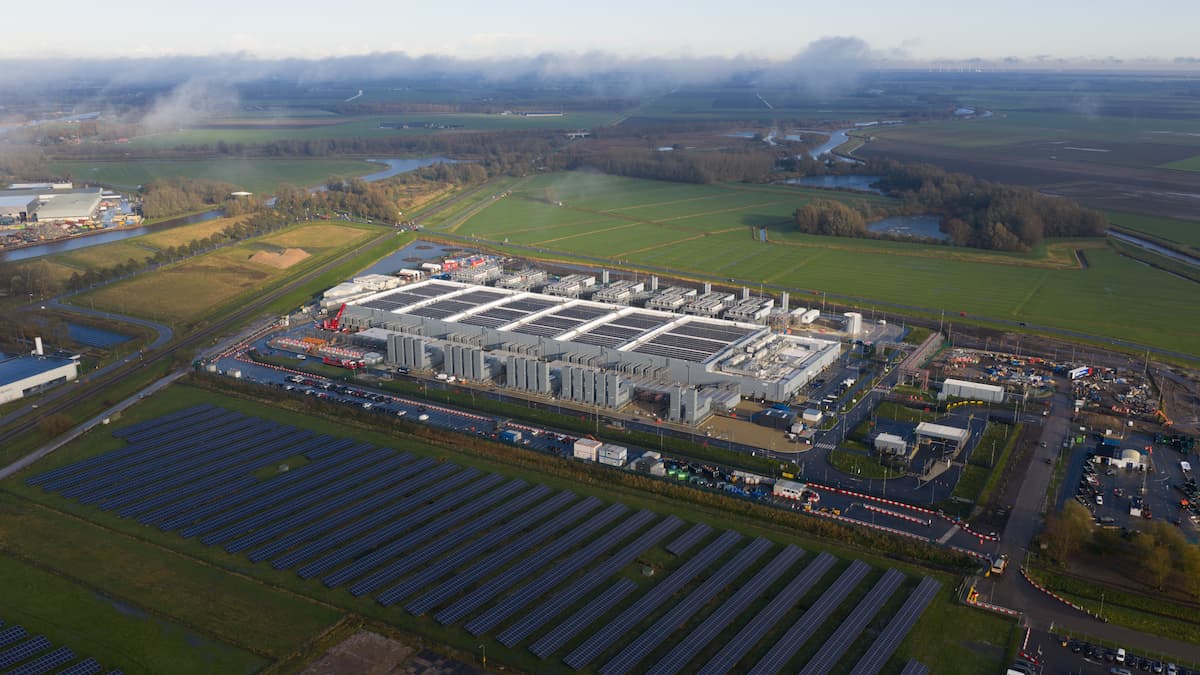
If you're building or buying power generation for an AI data center, there's a good chance the North American Electric Reliability Corporation (NERC) isn't on your radar yet. It should be.
Who is NERC, and why do they care about data centers?
NERC is the organization responsible for the reliability of the bulk power system (BPS) (the high-voltage transmission grid) across the United States, Canada, and part of Mexico. It doesn't build or own infrastructure. Instead, it sets the reliability standards that utilities and grid operators are legally required to follow, and it can enforce those standards with real penalties.
NERC has started paying close attention to AI data centers because they don't behave like the loads the grid was designed around. A large industrial facility draws power steadily and predictably. A hyperscale AI campus doesn't: it can swing hundreds of megawatts (MW) in seconds as training workloads ramp up or down, and its internal protection systems, the uninterruptible power supplies (UPS) and relays built to protect the servers inside, can disconnect the entire facility from the grid in under a second if they sense anything abnormal.
NERC has now documented real incidents, in January 2025 and January 2026, where a routine grid disturbance that utilities cleared normally still caused a facility to drop enormous amounts of load with no operator involved at all. More recently, in July 2026, a transmission line fault in Northern Virginia caused more than 3 gigawatts (GW) of data center load to disconnect from the grid, the largest drop-off event from data centers to date, causing voltage levels across the PJM region to spike before operators restored normal conditions.
What is the Large Loads Action Plan?
The Large Loads Action Plan (LLAP) is NERC's response to these incidents — a multi-year effort to bring "computational loads" from AI data centers and similar facilities into a formal reliability framework for the first time. NERC's Board directed staff to build the plan in early 2025, and it has been developing standards, guidelines, and registration criteria since.
The plan's most consequential milestone so far landed on May 4, 2026, when NERC issued a Level 3 Essential Action Alert. NERC uses a three-tier alert system, with Level 3 "Essential Actions" as the highest tier. It's been invoked only a handful of times in NERC's history. This alert directs seven Essential Actions that registered utilities must act on now, with full responses due on August 3, 2026, targeting the Board for adoption of binding Reliability Standards by the end of 2026.
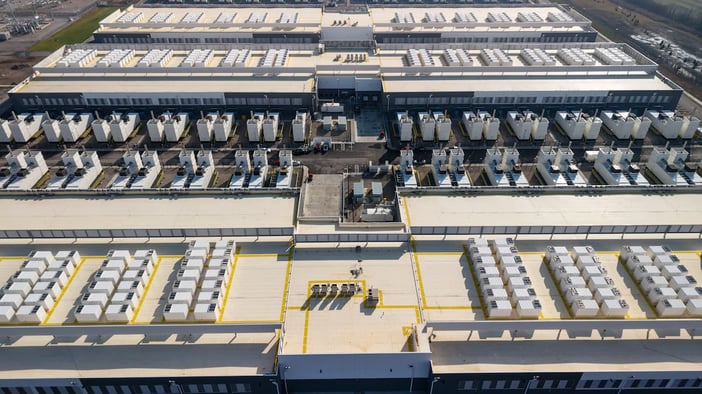
What hyperscalers need to know: this alert wasn't issued to you
The Level 3 Alert was issued to Transmission Planners, Planning Coordinators, Transmission Owners, Balancing Authorities, Reliability Coordinators, and Transmission Operators for the utilities and grid operators in NERC's registration system. It was not sent directly to data center developers, hyperscalers, or IPPs.
But, that doesn't mean you're off the hook. Every one of those seven actions requires data, cooperation, and evidence from the generation and load facilities in a utility's footprint, meaning the obligation flows straight down to your project, informally, well before any standard becomes mandatory for you directly. And NERC is working on a separate track that would close that gap entirely: draft criteria for a new "Computational Load Entity" registration category, which would eventually require some data centers and large loads to register with NERC and comply with its standards directly, not just through their utility. If that criteria is finalized in anything close to its current form, some hyperscalers will find themselves NERC-registered entities in their own right.
How should this inform what you're building or buying right now?
If you're developing generation to serve a hyperscale campus in the next year, or acquiring existing generation assets, the standards won't be final by the time you're deep into interconnection. But the expectations behind them already are showing up in utility conversations, and they will only get more specific as the December 2026 deadline approaches.
In practice, that means the old approach of showing up with a load forecast and an energization date is no longer enough. More and more utilities are asking for validated dynamic models of your generation, documented ride-through behavior, disturbance monitoring at your point of interconnection (POI), and commissioning test plans that prove your as-built asset matches what was studied. Projects that arrive with this evidence already in hand will clear interconnection faster than the ones that scramble for it once the standard is final.
The 7 essential actions behind NERC’s Level 3 Alert, and what they mean for you
1. Computational load modeling. Transmission Planners and Planning Coordinators need real data on the load itself, like expected MW consumption, ramp rates, the split between IT and non-IT load (like cooling), and protective device settings. On-site generation, where you have it, factors in too, not just a load forecast.
2. System studies. Planners will study how your facility affects system stability, and where losing your load or generation would cross a planning-criteria threshold.
3. Protection review criteria. Planning Coordinators are revising the definition of a "qualified change" that triggers a review of local protection and stability limits, specifically to account for computational loads. In practice, this means your project is more likely to trigger a fresh protection study than a comparable facility would have a few years ago.
4. Commissioning. Before you energize, your Transmission Owner will want to functionally test your SCADA points and your on-site generation operating in parallel with the grid, and confirm that what's actually built matches what was studied.
5. Ride-through. When a transmission fault happens, the utility clears it normally within a few cycles. But the facility's own protection can trip it offline anyway, even though the grid event never actually threatened it. The goal is coordinating protection settings between the utility and the facility so fewer of these unnecessary disconnections happen.
6. Disturbance instrumentation. Utilities are being directed to install dynamic fault recording equipment at computational load facilities, so there's a clear record of what actually happened during an event.
7. Communication. Grid operators need a direct line to computational loads during emergencies, such as voice, SCADA, or another platform, not just a static interconnection agreement.
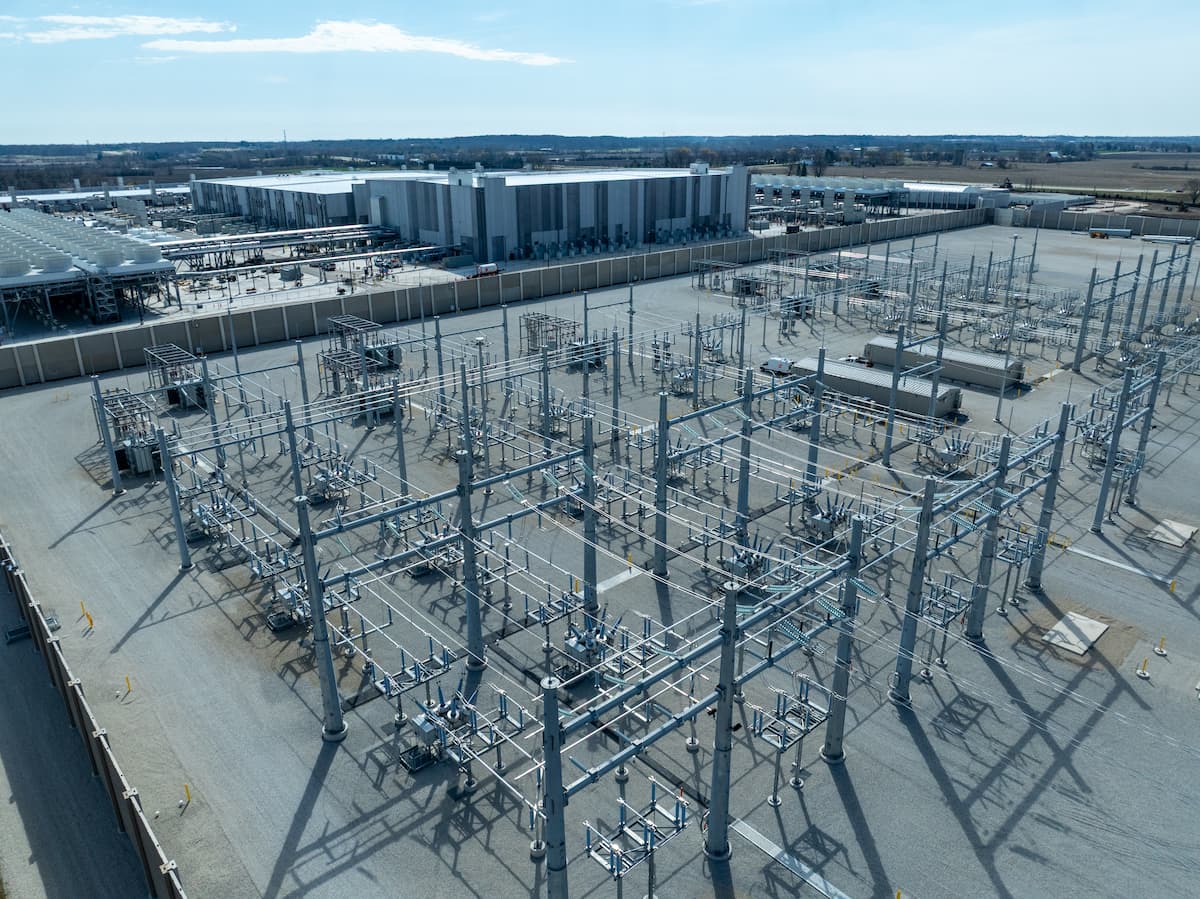
3 ways Unity Energy Management System prepares you for NERC's LLAP
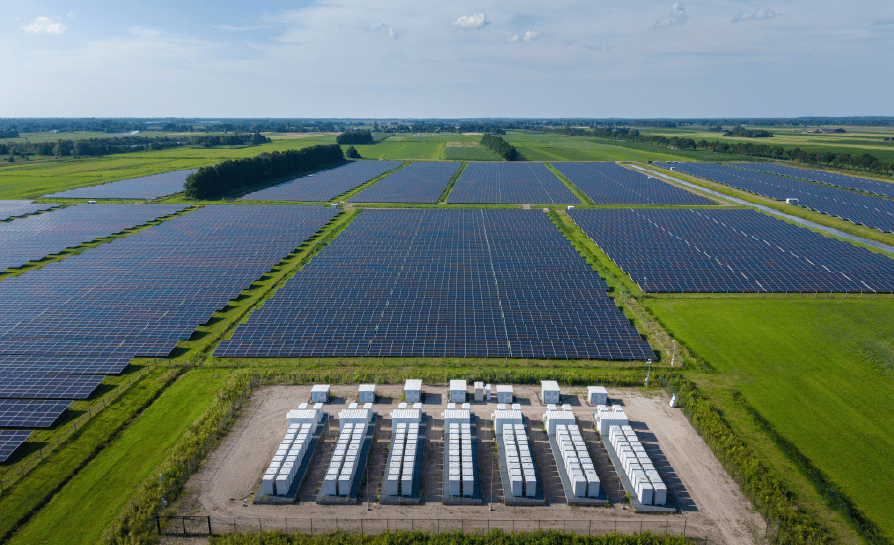
Unity Energy Management System (EMS) is Power Factors' supply-side control and monitoring layer for battery energy storage systems, solar, wind, and other generation collocated with large computational loads. It's not a substitute for the protection engineering your project and your utility need to work out directly. But it does give you a head start on the parts of this that are operational and data-driven, well before the standards are final:
-
Modeling and commissioning data, on tap. Unity already tracks the real-time and historical generation data, such as BESS charge and discharge behavior, PV output, and ramp rates, that Action 1 and Action 4 ask utilities to collect, plus the commissioning documentation (test procedures, SCADA point verification, as-built records) that a Transmission Owner will expect to see.
-
Visibility into ride-through performance. Unity can monitor power quality at your point of interconnection and help surface whether your facility actually rode through a fault or disconnected unnecessarily, which is the exact question Action 5 is trying to answer.
-
One place to monitor disturbance data. Unity EMS doesn't build or sell fault recording hardware, as that stays your responsibility or your utility's under Action 6. But Unity does integrate the signals from the recorders you already have into the same SCADA layer where you're monitoring your BESS, gensets, and PV, so you're not managing disturbance data in a separate silo.
If you're building generation for hyperscale demand in the next year, don't wait for the standards to be finalized. Utilities are already asking for this evidence in interconnection conversations right now.
Get in touch to talk through what the Large Loads Action Plan means for your project or learn more about how Power Factors delivers energy control for mission-critical data centers.
End-to-end solutions across the entire renewable asset lifecycle




Optimize assets, maximize revenue, and grow your portfolio with Unity